Services
Foot and Nail Care
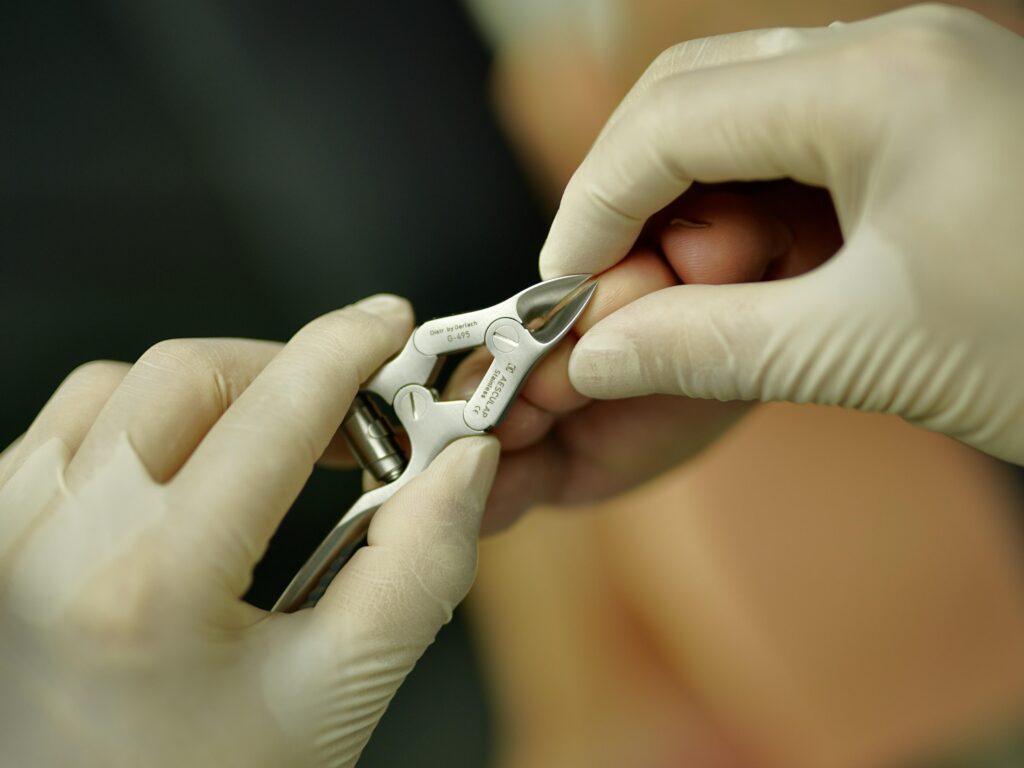
Throughout life, we often overlook our feet and toenails, not realising how signifcantly they can impact overall health and mobility. As we get older, however, many people begin to notice unwanted and often painful changes in their feet and nails. These changes can become difficult to mange independently and may sometimes indicate underlying health issues.
Over time, these problems can develop into pathological conditions, including:
- Severe nail thickening (onychogryphosis)
- Fungal nail infections (onychomycosis)
- Structural nail deformities, such as misshapen nails
- Ingrown toenails (onychocryptosis)
- Thickening of the skin (callus), usually due to friction or pressure
- Corns, which are small, localised areas of hardened skin with a painful central core
- Skin infections, including bacterial or fungal conditions affecting the feet
Left untreated, these conditions can impact comfort, mobility, and overall quality of life.
The good news is that all of these conditions can be effectively managed and often prevented with regular professional care and early intervention.
Diabetic/General Foot Assessments
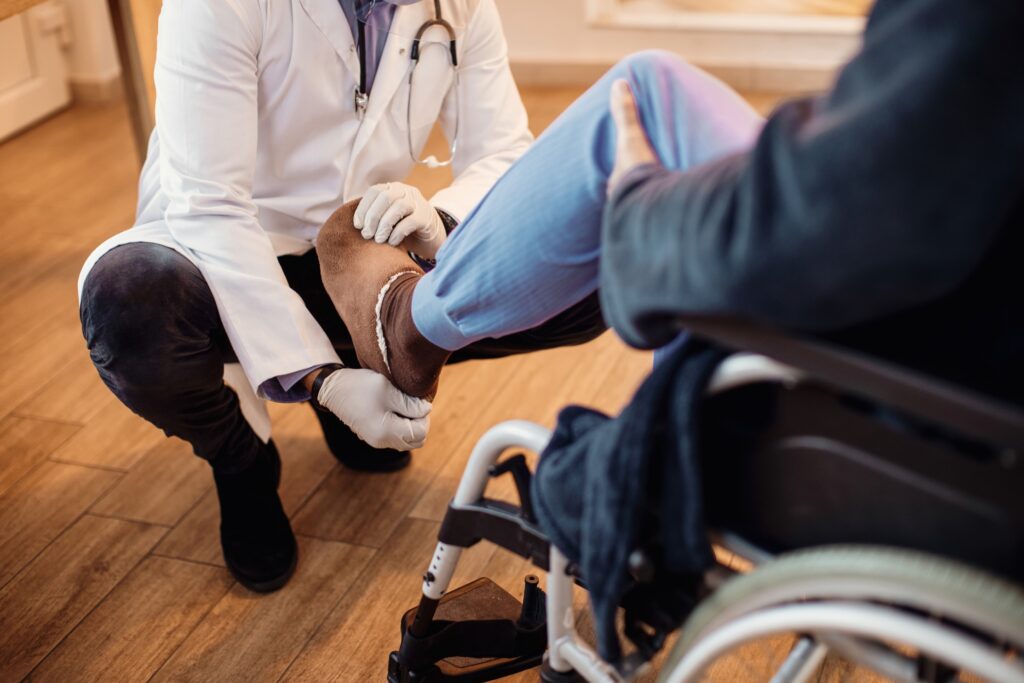
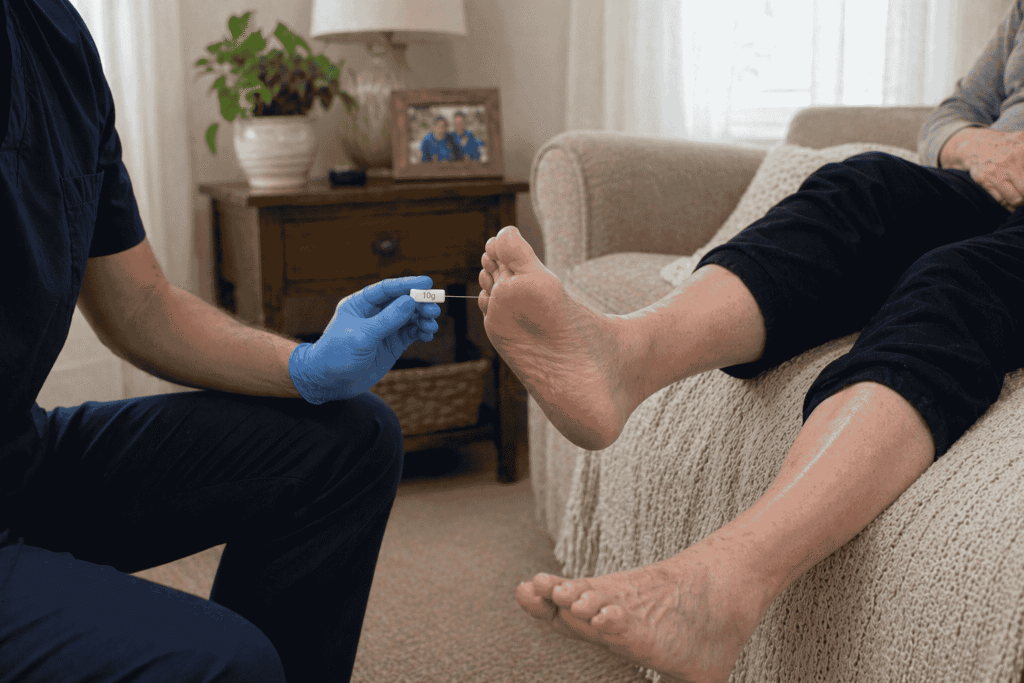
Podiatrists are trained to perform a comprehensive neurovascular assessment of the feet to determine the lower limb risk status for potential foot complications.
A neurovascular assessment is a thorough, non-invasive evaluation of both nerve function (neuro-) and blood circulation (-vascular) in the feet. This involves a combination of clinical tests and a detailed physical examination.
These assessments are particularly important because they can:
- Detect early complications: Individuals with conditions such as diabetes or poor circulation are at increased risk of nerve and blood vessel damage. Regular assessments help identify issues early, often before symptoms become noticeable.
- Diagnose conditions such as peripheral arterial disease (PAD): Reduced blood flow to the feet can lead to pain, delayed healing, and increased risk of tissue damage.
- Identify nerve damage (peripheral neuropathy): Loss of sensation can mean injuries go unnoticed, increasing the risk of complications.
- Prevent serious outcomes such as ulceration and amputation: Reduced sensation combined with poor circulation significantly increases the risk of foot ulcers. If left untreated, these ulcers can become infected, potentially leading to gangrene and, in severe cases, amputation.
Biomechanical Assessments
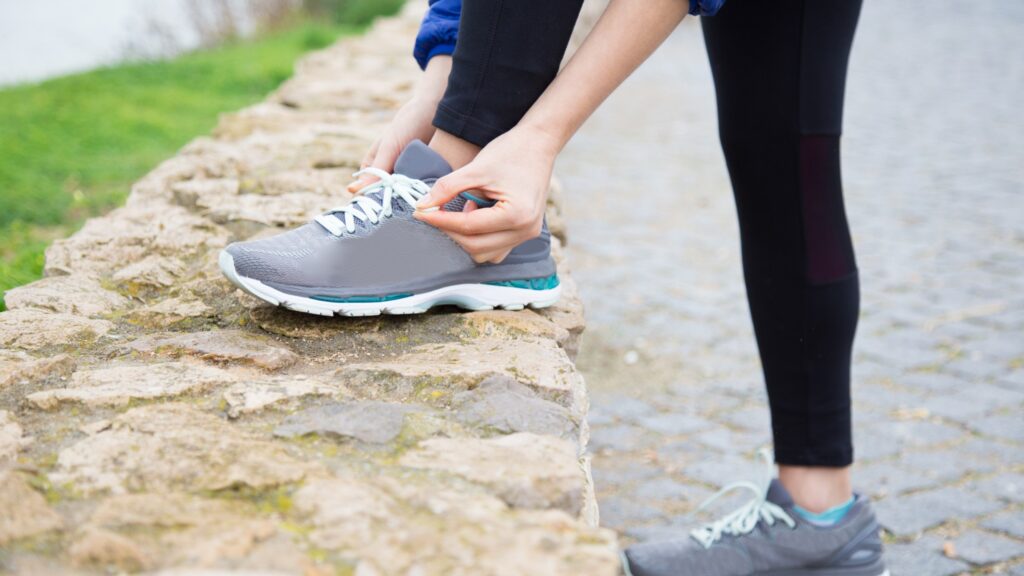
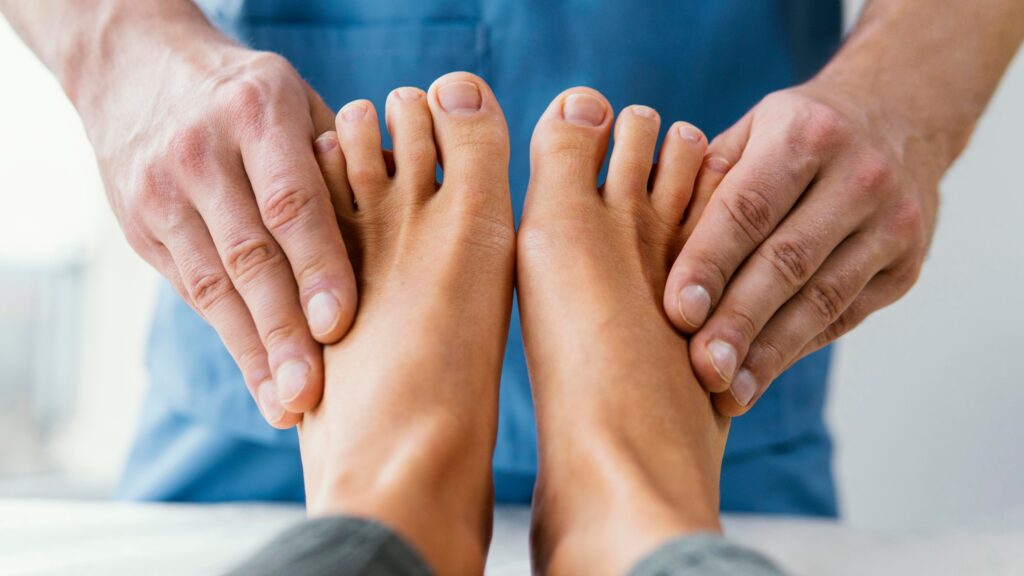
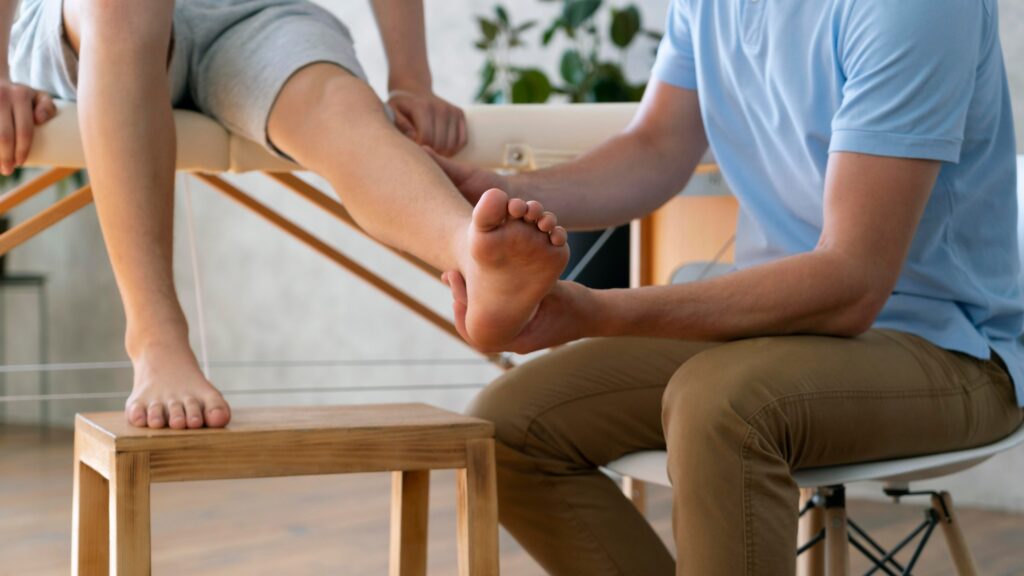
Our podiatrists provide comprehensive biomechanical assessments in the comfort of your home, analysing how your feet, ankles, knees, and hips move and work together. This assessment helps identify the underlying causes of pain, dysfunction, or mobility issues, not just the symptoms.
By evaluating the way your joints interact during movement, we can detect problems such as poor alignment, muscle imbalances, joint stiffness, and abnormal walking patterns that may be contributing to foot, heel, knee, or even lower back pain.
The specific assessments involved are:
- Detailed Medical History: We take the time to understand your overall health, including previous injuries, current symptoms, lifestyle factors, and activity levels. This helps us build a complete picture of what may be contributing to your condition.
- Physical Exam: A hands-on assessment is performed to evaluate joint range of motion, foot posture, alignment, and muscle strength. We assess how your body moves both statically (standing) and dynamically.
- Gait Analysis: We observe how you walk in your natural environment, allowing us to identify abnormal movement patterns, compensations, or inefficiencies that may not be visible in a clinic setting.
Orthotic Therapy and Footwear Assessment
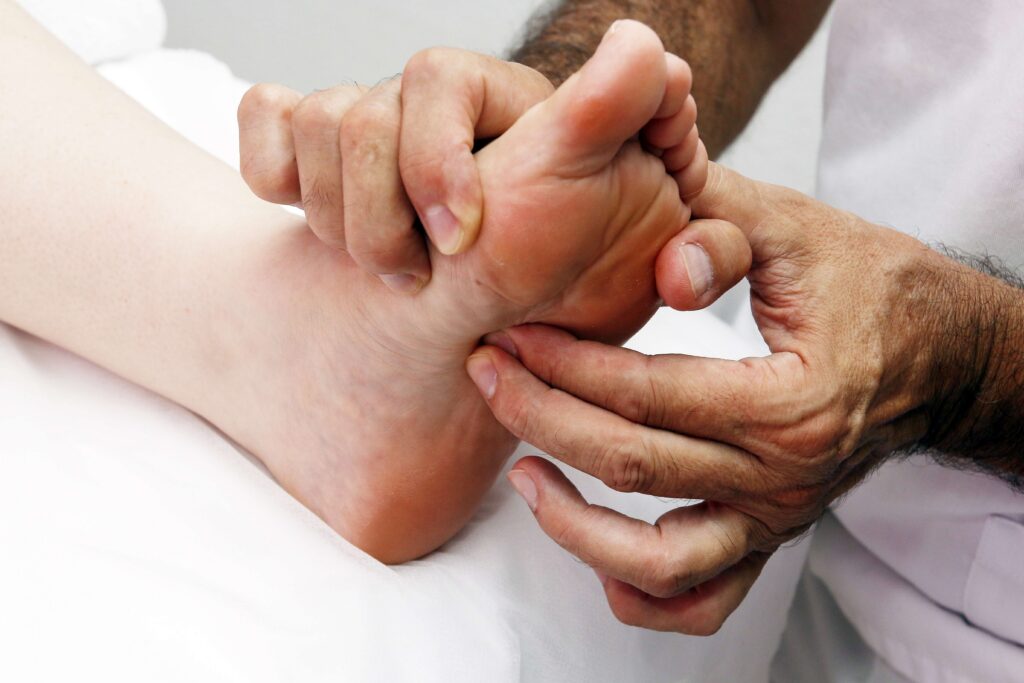
Our podiatrists provide expert orthotic therapy and footwear assessments in the comfort of your home, helping to relieve pain, improve stability, and correct underlying biomechanical issues.
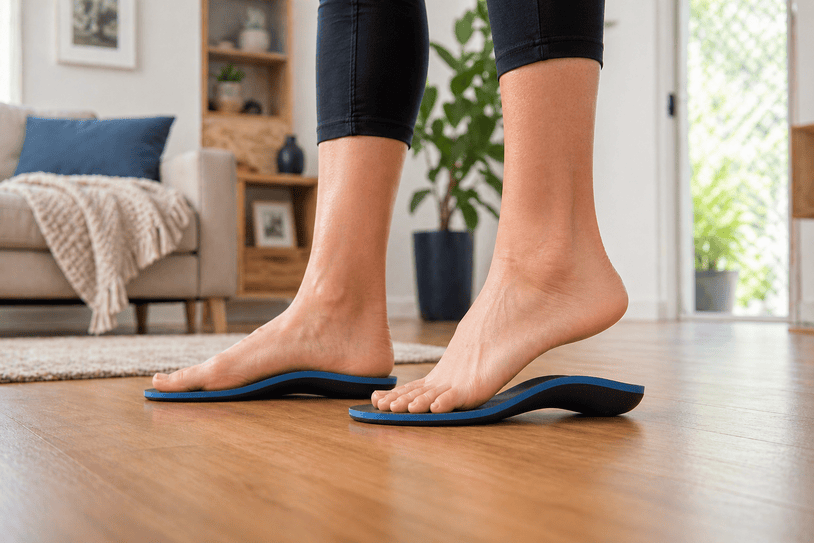
Orthotics are specially designed shoe inserts that support and align your feet, improving the way your body moves from the ground up. Depending on your needs, we may recommend custom 3D-scanned orthotics tailored precisely to your foot shape, or high-quality prefabricated devices for effective and immediate support.
Combined with a detailed footwear assessment, we ensure your shoes are providing the right support, fit, and function for your condition and lifestyle.
Conditions we commonly treat
- Heel and Arch Pain: Conditions such as plantar fasciitis, heel spurs, and chronic inflammation can cause sharp pain, especially with the first steps in the morning. Orthotics help offload pressure and support the arch for relief.
- Forefoot Pain: Issues like bunions, hammertoes, and pain in the ball of the foot (metatarsalgia) can be improved by redistributing pressure and reducing friction.
- Tendon and Joint Pain: Orthotics can assist in managing conditions such as Achilles tendonitis, shin splints, Morton’s neuroma, and ankle arthritis by improving alignment and reducing strain.
- Foot Misalignment: Flat feet (overpronation) or high-arched feet (supination) can lead to poor shock absorption and instability. Orthotics help restore more natural foot function.
- Referred Pain: Poor foot mechanics can contribute to pain in the knees, hips, and lower back. By correcting foot alignment, orthotics can improve overall posture and movement patterns.
- Chronic Conditions: For individuals with diabetes or rheumatoid arthritis, orthotics can reduce pressure points, improve comfort, and help lower the risk of complications such as skin breakdown or ulceration.