
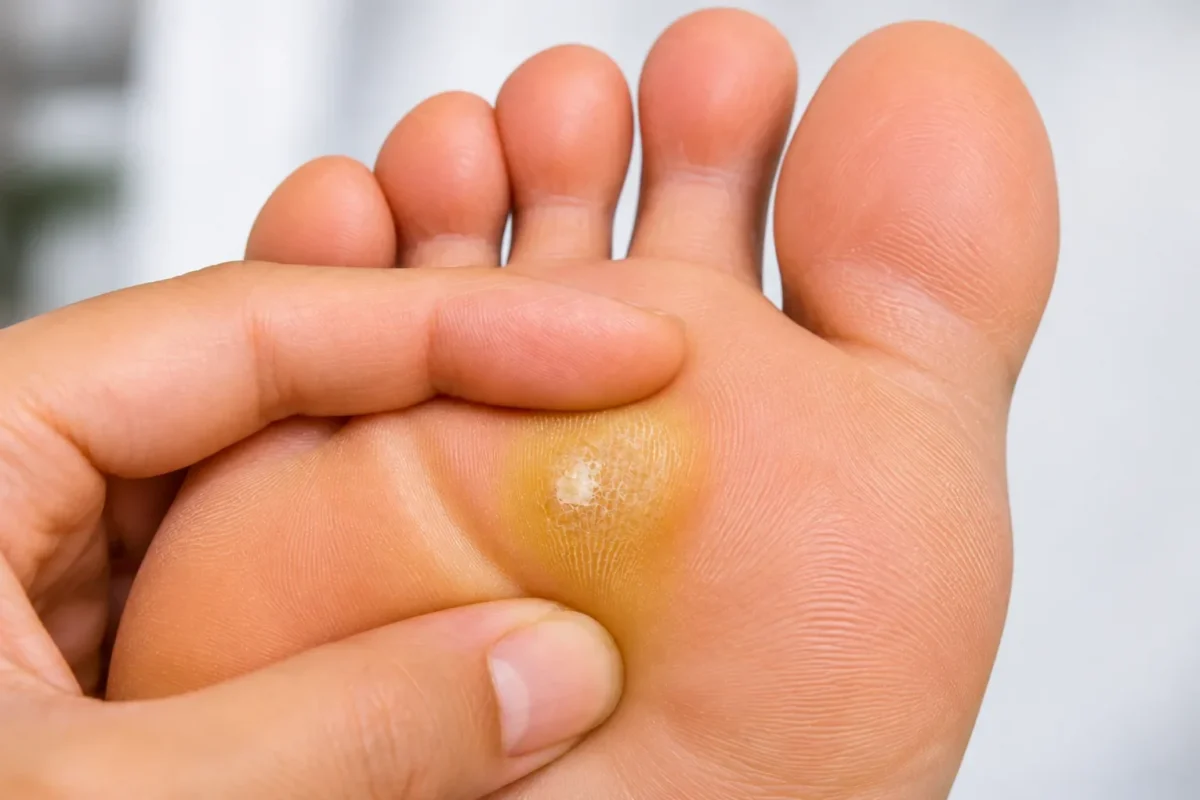
Have you ever felt a sharp pain in your foot when walking, almost like you’re stepping on a small stone? You might have a corn.
Corns are a common foot problem. They may look small, but they can cause quite a bit of pain, especially when you’re walking or wearing shoes.
The good news is that a podiatrist can help treat corns and work out what’s causing them to develop.
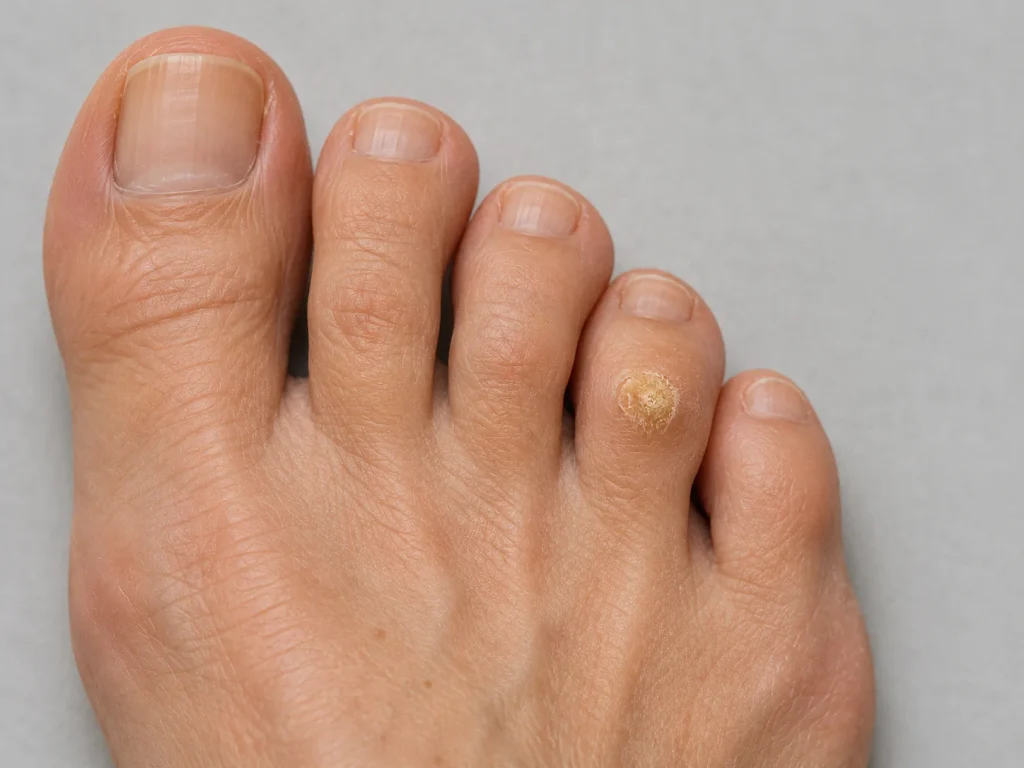
A hard corn (Heloma Durum) on the top of a toe.
What Are Corns?
A corn is a small area of hard, thickened skin that forms when your foot experiences repeated pressure or rubbing. Your skin responds by building up extra layers to protect the area.
Over time, these layers can form a small, hard centre that presses into the surrounding skin. This is why corns can become painful, even when they don’t look particularly large.
You can develop corns in several areas of your feet, including:
- On top of your toes
- Between your toes
- Under the balls of your feet
- Along the sides of your feet
- Over bony areas or joints
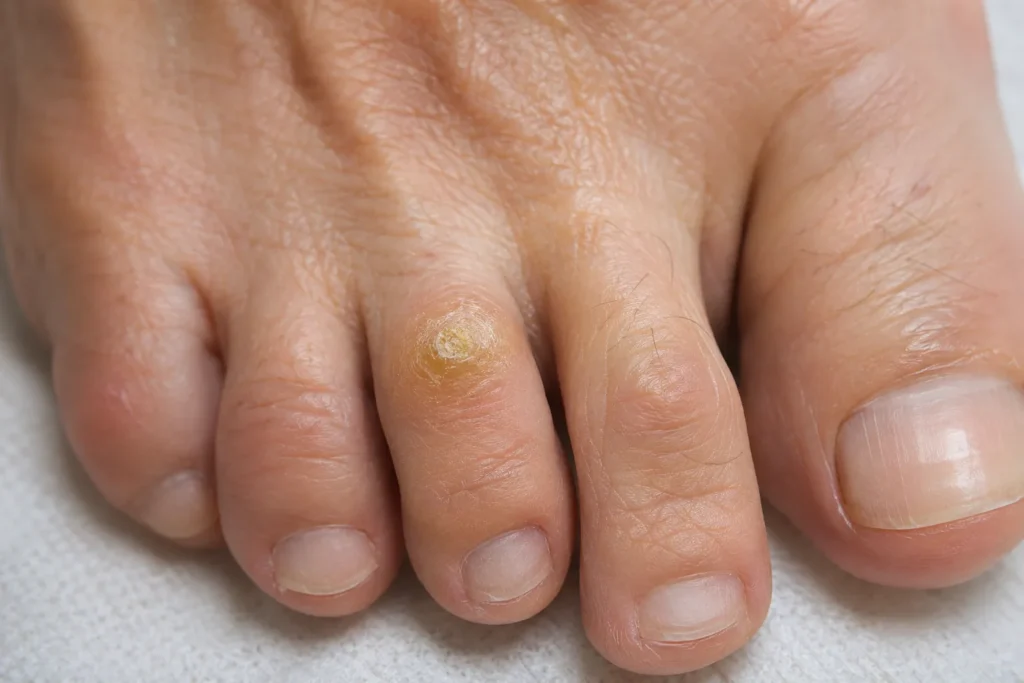
A hard corn developing over a toe joint due to repeated pressure or friction.
What’s the difference between a corn and a callus?
Corns and calluses are similar, but they aren’t quite the same.
A callus usually covers a larger area of skin and tends to be flatter. A corn is generally smaller and has a more concentrated centre, which can cause pain when pressure is applied.
What Causes Corns on Your Feet?
Corns don’t usually develop overnight. They form gradually when an area of your foot experiences too much pressure or friction.
There are several reasons why this might happen.
1. Shoes That Don’t Fit Properly
Tight or narrow shoes are a common cause of corns.
When your shoes squeeze your toes or rub against certain areas of your feet, your skin can gradually become thicker. Over time, a corn may develop.
Even shoes that feel comfortable at first can cause problems if they don’t provide enough room for your toes.
2. Changes in Your Toe Position
Conditions such as hammertoes, claw toes and bunions can change the position of your toes.
This can cause certain joints to rub against your shoes or neighbouring toes. The repeated pressure may eventually lead to a corn.
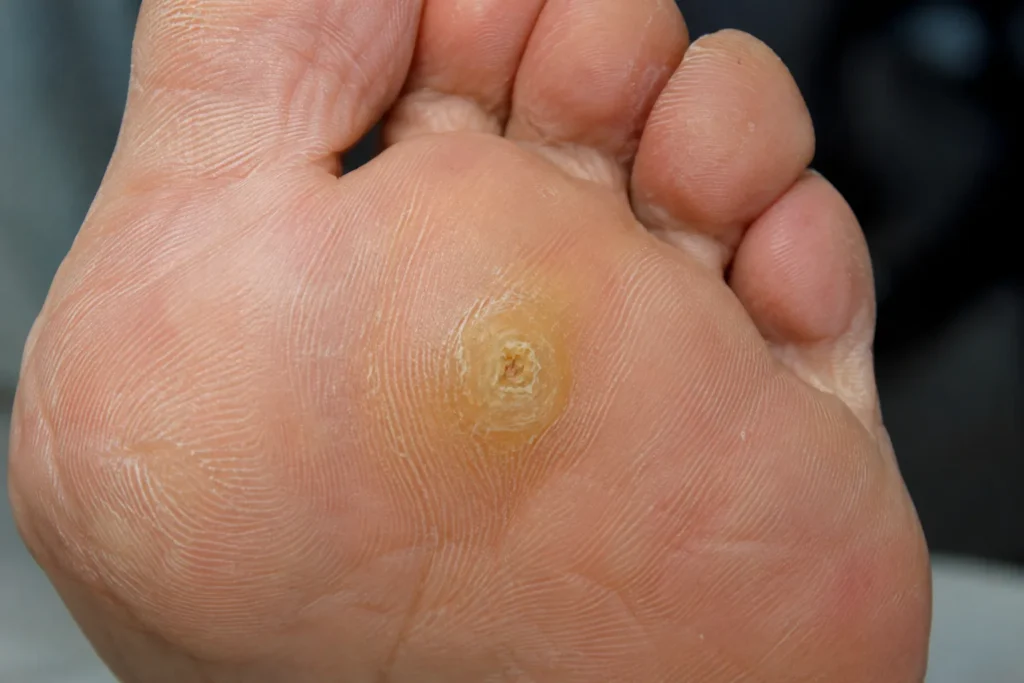
A hard corn beneath the ball of the foot, where pressure builds up during walking.
3. Changes to Your Feet as You Age
As you get older, the natural fatty padding underneath your feet can become thinner.
This means the bones beneath your feet may experience more pressure when you’re standing or walking.
You might notice corns developing under the balls of your feet, particularly if you spend a lot of time on your feet.
4. The Way You Walk
Everyone walks a little differently.
Sometimes, the way you walk places more pressure on one part of your foot than another. If this pressure continues, your skin may respond by developing a corn.
A podiatrist can assess your feet and walking pattern to help identify areas of increased pressure.
How Are Corns Treated?
If you’ve ever had a painful corn, you’ll know how uncomfortable it can be.
Fortunately, a podiatrist can usually treat a corn during a routine appointment.
Your podiatrist will first examine the affected area to confirm that it’s a corn and check for any underlying problems.
They can then carefully remove the thickened skin and hard centre using specialised sterile instruments. This treatment is often called debridement.
Removing the corn reduces pressure on the surrounding skin and can provide noticeable pain relief.
Will the corn come back?
It might.
Removing a corn treats the thickened skin, but it doesn’t always fix the reason it developed in the first place.
If your shoes continue rubbing against the same area, or your foot continues experiencing excessive pressure, the corn can gradually return.
This is why your podiatrist may recommend changes to your footwear, protective padding or insoles to help reduce pressure.
For some people, regular podiatry appointments may also be helpful in managing recurring corns.
Can You Remove Corns Yourself?
You may have seen corn removal plasters or treatments available at your local pharmacy.
While these products might seem convenient, they aren’t suitable for everyone.
Some corn removal products contain acids that break down thickened skin. Unfortunately, they can also damage the healthy skin around the corn, particularly if they’re used incorrectly.
You should also avoid trying to cut or dig out a corn yourself with scissors or sharp instruments. This can cause bleeding or damage your skin.
If you have diabetes, poor circulation or reduced feeling in your feet, you should not attempt to remove corns yourself.
Even a small injury can become a serious problem if it isn’t noticed or treated early.
Having your feet assessed by a podiatrist is a safer option, especially if your corn is painful or keeps returning.
How Can You Prevent Corns?
You can’t always stop corns from developing, but there are ways to reduce the pressure that causes them.
Wear Shoes That Fit Your Feet
Your shoes should have enough room for your toes to move comfortably.
Try to avoid shoes that squeeze your toes or regularly rub against the same spot.
If you have bunions or hammertoes, you may benefit from shoes with a wider or deeper toe box.
Reduce Pressure on Painful Areas
Depending on where your corn develops, your podiatrist may recommend protective padding or toe separators.
These can help reduce rubbing between your toes or pressure from your shoes.
In some cases, insoles or orthotics may also help redistribute pressure underneath your feet.
Look After Your Skin
Keeping your feet moisturised can help prevent the skin from becoming excessively dry.
Apply a suitable foot moisturiser regularly, particularly around areas of dry or hard skin. Avoid applying moisturiser between your toes, where excess moisture can cause skin problems.
Have Your Feet Checked Regularly
If your corns keep coming back, there may be an ongoing pressure problem that needs attention.
A podiatrist can check your footwear and examine your feet to help work out why the corns are returning.
When Should You See a Podiatrist for Corns?
You don’t need to wait until a corn becomes extremely painful before seeking treatment.
Consider booking a podiatry appointment if:
- Your corn hurts when you walk or wear shoes.
- The corn keeps returning after treatment.
- You’re starting to change how you walk because of the pain.
- You’re unsure whether the hard skin is a corn or another foot problem.
- You have diabetes or circulation problems.
If you notice broken skin, bleeding or signs of infection around a corn, seek medical attention promptly.
Corn Treatment at Home in Adelaide
Having a painful corn can make everyday activities difficult, particularly if walking or getting to appointments is already a challenge.
At All Needs Podiatry, we provide podiatry home visits across Adelaide, so you can receive foot care in the comfort of your own home.
During your appointment, we can assess your feet and carefully treat painful corns. We’ll also look at what might be causing the pressure and discuss ways to help prevent the corn from returning.
Whether your corn has only recently developed or you’ve been dealing with recurring corns for some time, we’re here to help you walk more comfortably.
Need Help With Painful Corns?
If you’re experiencing painful corns or other foot problems, All Needs Podiatry can help.
Contact All Needs Podiatry today to arrange a podiatry home visit in Adelaide.
Written by Michael Cedar
Podiatrist and Owner of All Needs Podiatry
Bachelor of Podiatry, University of South Australia (2021). Experience in public hospital, private practice and community podiatry, with particular interests in aged care, diabetic foot health and biomechanics.
Published Date: 10 November 2026
Last reviewed: 10 November 2026